Rooms
AI Bedroom Design: A Practical Guide to a Calmer, Better Room
Renderist Team ·
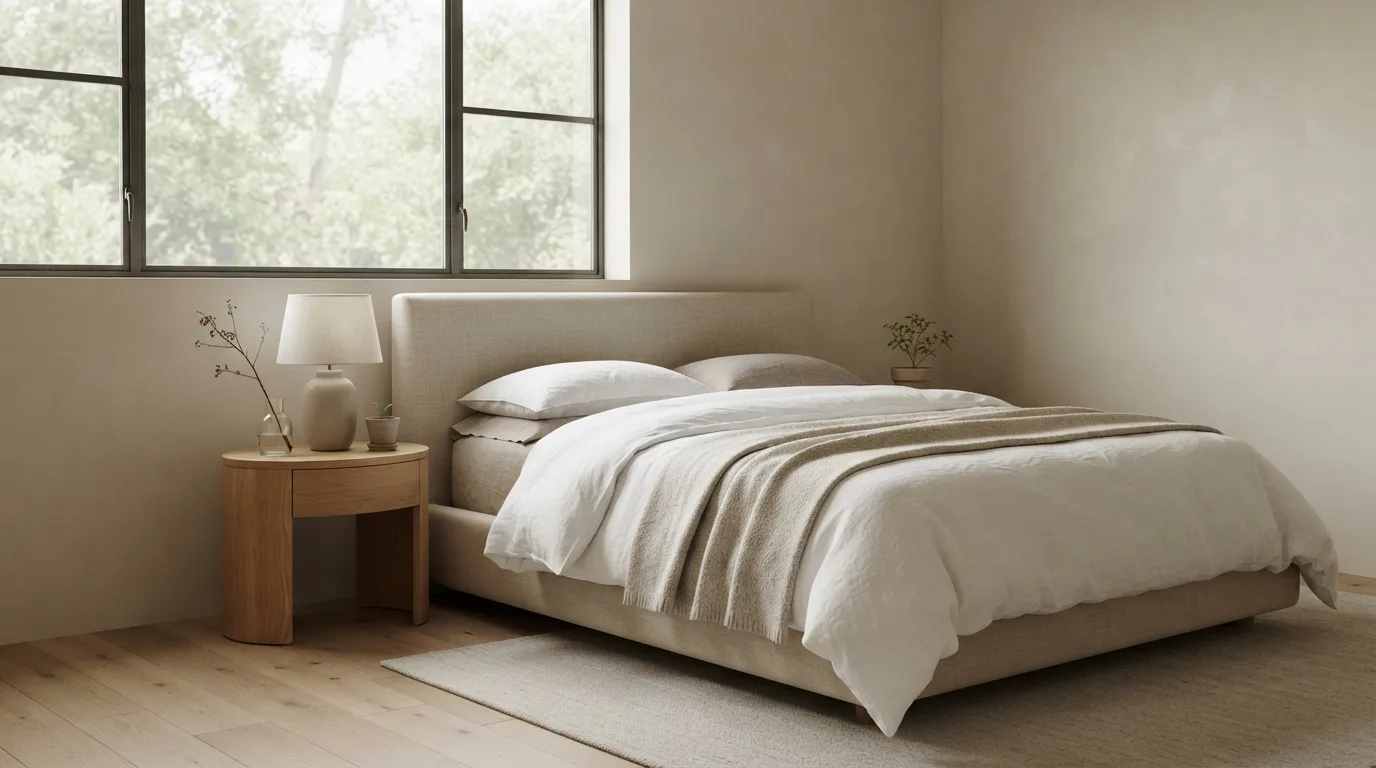
What does AI actually change about bedroom design?
AI bedroom design changes what you decide first. Instead of buying furniture and hoping it fits, you upload a photo of your room and test several style directions before spending anything. The order flips: variants first, purchases second. That matters because the room is not a side project. You spend a large part of every day there, and a well-planned bedroom feeds directly into how well you rest. Getting the layout and palette wrong costs you every night, not just once at the till. The tools have moved past simple style filters. Restagely describes platforms that now understand spatial relationships, furniture scale and how light behaves in a room, and they recognize the room type, so a bedroom gets bedroom furniture instead of a dining table. Weak room recognition shows up as furniture blocking doorways or sofas clipping through walls. Where it goes wrong is trust without checking. A generated image is a proposal, not a measurement, so you still verify bed placement against door swings and radiator space. Watch the free tiers too: of five tools compared by TOT, only two gave a genuinely usable free allowance, and both were one-time gifts to new accounts. Start with the calm palette. Mokka, bottle green and anthracite read differently depending on daylight and which way your windows face, and testing them on your own photo takes about an hour instead of a repaint.Where should the bed go, and what works behind it?
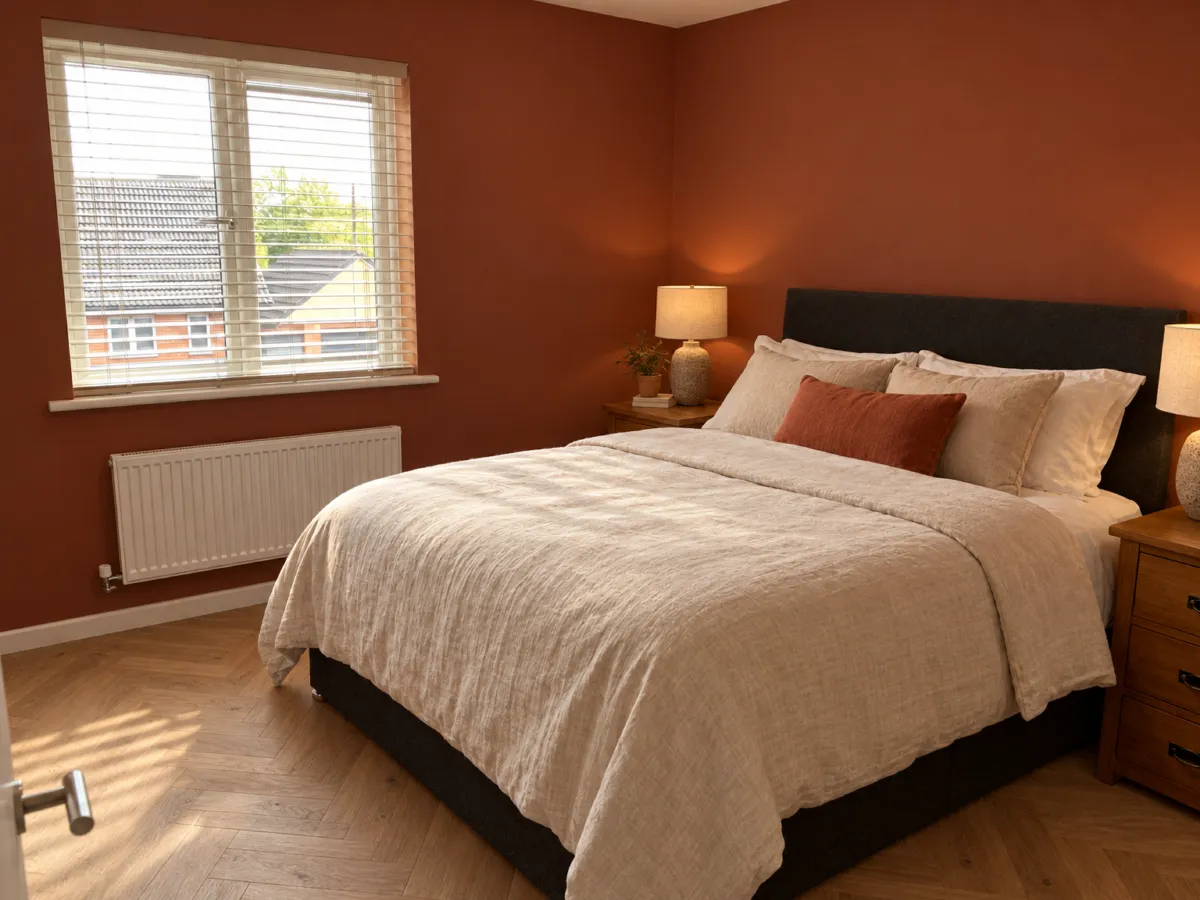
The bed anchors everything else, so settle its position before you look at a single piece of bedroom furniture. Walk the room and mark where the door swings, where the radiator sits and which wall you face when you wake up. A bed pushed against a window looks fine in a render and feels wrong on a cold winter morning. Test two or three placements rather than committing to the first one. An AI bedroom design generator takes a photo of your actual room and returns a new version with the walls, windows and camera angle kept in place. That is the difference between a mood board and a layout you can measure against your own floor. Behind the bed, pick one idea and stop. A dark wall in mokka, bottle green or anthracite with the other walls in white gives the room a center without closing it in. Oak slats do the same job with warmth instead of contrast. Both are cheap to test on screen and expensive to redo in paint. Two pendant lights hung instead of bedside tables free up floor space and keep the top of the bed visually clear. A large mirror, 80 by 200 cm, on the wall opposite the window makes a small room read bigger. Hang it where it reflects light, not where it reflects the bed. Then check the render for the errors that give weak tools away: furniture blocking the doorway, a sofa clipping through a wall. If the layout breaks basic physics, the tool did not understand the room.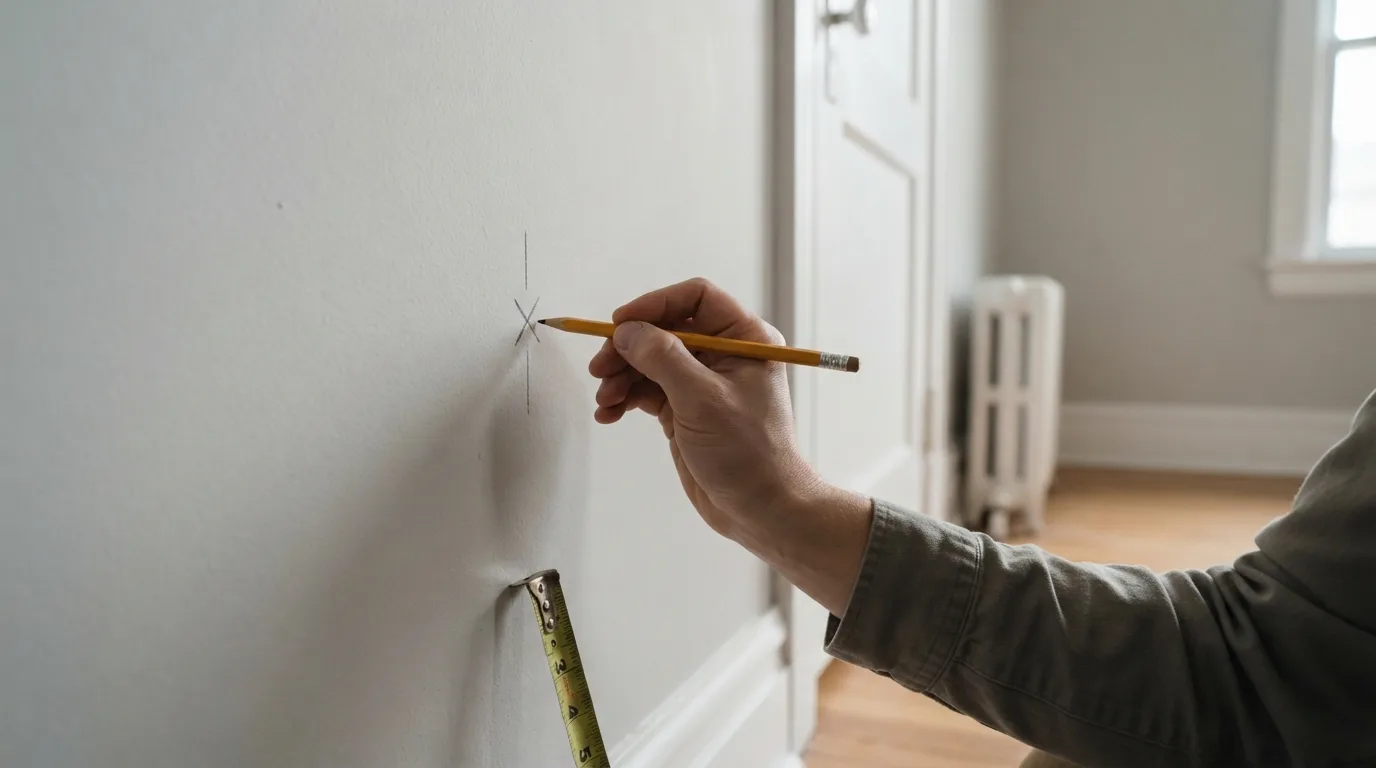
Which lighting and textiles make a bedroom feel calmer?
Lighting decides whether the calm colors you picked actually read as calm after dark. A single ceiling fixture flattens every wall and makes even a deep mokka look gray. Two hanging lamps instead of nightstands do more for the room: they free floor space and drop warm light right where you read. Test the swap in a visualization before you drill anything. Textiles carry the softness that paint cannot. Layer a washed linen duvet, a wool throw and one heavy curtain, and keep the palette within two tones so the bed stays the focus. The trick is contrast in texture, not in color. If your bedroom styles lean japandi or modern moody, matte fabrics in the same family as the wall will hold the mood better than anything shiny. Watch the light direction before you commit. North-facing rooms pull green and gray cooler, so butelka zieleń can turn flat by afternoon. Renderist lets you see a palette under your own window before you buy paint, which is cheaper than repainting a wall you guessed wrong on. Keep one rule: light the bed, not the ceiling. Everything else in the room can stay quiet.What can go wrong with AI bedroom design?
The failures start before you generate anything: they start with a photo taken from the doorway, in flat evening light, with half the room out of frame. The tool reads what it is given, so a crooked, dim shot turns into a proposal that ignores the window wall or squeezes the bed into a corner that does not exist. Take the picture from two opposite corners, in daylight, with the doors open. The second trap is scale. An AI bedroom design generator can place a piece that looks right in the render and blocks the wardrobe door in real life. Poor room recognition shows up exactly like this: furniture parked in front of a doorway, a rug floating over a step, a sofa clipping through a wall. Measure your room before you trust any layout, and check every proposal against those measurements. Style drift is the quiet one. Ask for a calmer room and a tool may hand back something busier than what you have now, because it optimizes for a convincing picture, not for how the room feels at night. That is why ai interior design works best when you constrain it: keep the walls and floor as they are, change one thing at a time, and compare the results side by side rather than falling for the first attractive render. Then there is the money question. A free allowance runs out quickly, and most generators give you one taste before asking for payment. Before you pay for anything, decide what you actually need from the tool: a palette test costs you nothing but an hour, while a full furniture plan is worth money only if the room is measured and the photo is honest.How do I start with a free AI bedroom design?
The cheapest way to find out whether AI bedroom design works for you is to test one room before you spend anything. Most tools let you upload a photo of your bedroom and pick a style. What you get back is a new version of your own room, not a generic mood board. Free plans are worth checking closely. In one comparison of five tools, only two gave a genuinely usable free allowance, and both were one-time gifts to new accounts. Treat a free run as a single test, not a habit. If you need several rounds, plan on paying. Start with the layout question rather than the color scheme. A tool that recognizes the room type will keep a dining table out of your bedroom. A weaker one may push furniture in front of the door or let a sofa clip through a wall. Generate one option, then look at the door swing and the space around the bed before anything else. For the test itself, upload a straight-on photo with the curtains open and the bed made. Ask for one change at a time: an accent wall behind the bed, then different bedside lighting. Tools that keep the camera angle and the window positions let you compare versions honestly. If ai room design returns a picture that no longer matches your walls, the render tells you nothing about your room.FAQ - krótkie odpowiedzi
How much does AI bedroom design cost?
Expect to pay for a subscription or a one-off project, and the exact price depends on the tool you pick. The savings are easier to pin down than the fee: for a 12 m² bedroom, testing layouts before you buy can save you 2000 to 5000 zł on furniture mistakes. Check the tool's pricing page before you upload anything, because free allowances are often a one-time gift for new accounts.
Can AI design a bedroom for free?
Yes, some tools let you try a redesign without paying, but the free allowance is usually small and given once to new accounts. Of five tools compared by TOT, only two offered a genuinely usable free limit. Use that first run to test the layout and palette you are unsure about, then decide whether the paid version is worth it.
How long does an AI bedroom redesign take?
Testing several style variants takes longer than one render, so set aside an evening if you want to compare options properly. GenRoom points out that checking how a dark color like mokka or bottle green behaves in your natural light can be done in an hour.